
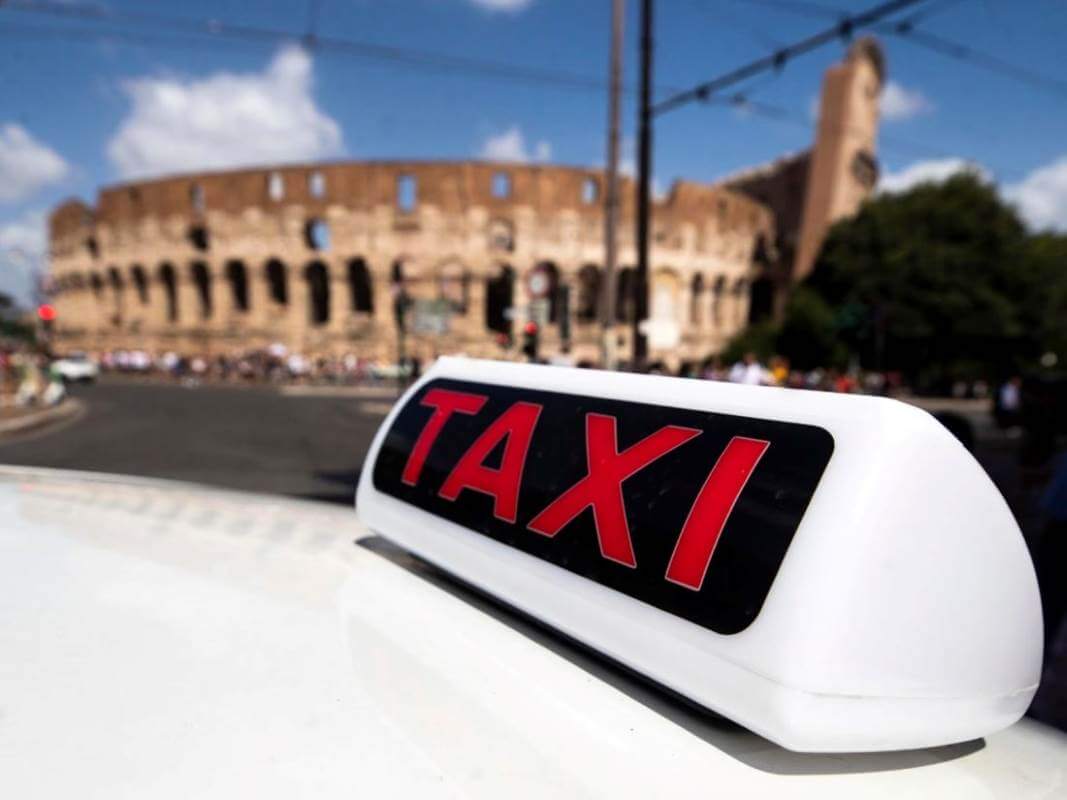
To improve public transport services and respond to increasing demand, the Municipality of Rome recently held a competition to allocate new taxi licences. Recrytera was involved in managing this complex and strategic project, from evaluating applications to publishing the results. But what is the process for issuing taxi licences in Italy in general? What are the differences in requirements and procedures between municipalities?
Let’s find out together.
The Rome Taxi competition: objectives and results
The Municipality of Rome has launched a public procedure to allocate a specific number of taxi licences, with the aim of increasing the availability of vehicles for residents and tourists, particularly in areas with heavy traffic. The initiative attracted many candidates and included theoretical and practical exams to assess their skills. The exams have now been completed, and the results have been welcomed with enthusiasm by the successful candidates and the public, who view these new licences as an improvement to the capital’s taxi service.
The Rome taxi competition: the numbers
Of the 4.274 people who applied to take part in the competition, 3.992 (3.226 men and 766 women) sat the exam. This means that 93.4% of those eligible took the exam. The average age of female candidates was 44.9 years, compared to 43.6 years for male candidates.
The graph shows participants divided by age groups.
Rome City Council has set the fee for the licence as follows:
- €75,500.00 for ordinary licences.
- For licences for vehicles specially equipped for the transport of disabled persons, the fee is €52,850.00.
Procedures and differences in major Italian cities
Obtaining a taxi licence is not a uniform process throughout Italy; each municipality can establish its own specific requirements. For instance, Bologna recently published a tender call like Rome’s, featuring independent participation and selection procedures. Milan has announced a taxi licence competition for 2024, setting the fee for a standard licence at €96,500.00 and for a licence to transport people with disabilities at €77,200.00.
The issuance of new licences is a hot topic in many cities, but the approach to selection varies greatly. Some municipalities prefer periodic procedures, while others choose to issue licences only when there is a real need.
Licence costs and allocation procedures
In general, the cost of obtaining a taxi licence varies significantly depending on the city and selection procedure. As well as being a qualification, the licence is a significant investment for those wishing to operate in the sector, with costs in major Italian cities exceeding tens of thousands of euros. In some municipalities, tenders are very rare, while in others, they are held periodically to ensure constant turnover and the availability of authorised vehicles.
The issue of taxi licences and related procedures remains a key topic of interest for Italian municipalities, who must respond to ever-changing needs in an ever-evolving urban context.
Thanks to Recrytera’s involvement, the Taxi Roma competition has benefited from innovative solutions that have made the entire recruitment process more accessible, transparent, and modern. We also facilitated the management of applications and optimised procedures, reducing waiting times, and ensuring equal opportunities for all candidates. This approach has not only simplified access to the competition but also enabled the city to respond more promptly to public service needs in an efficient and inclusive manner.
